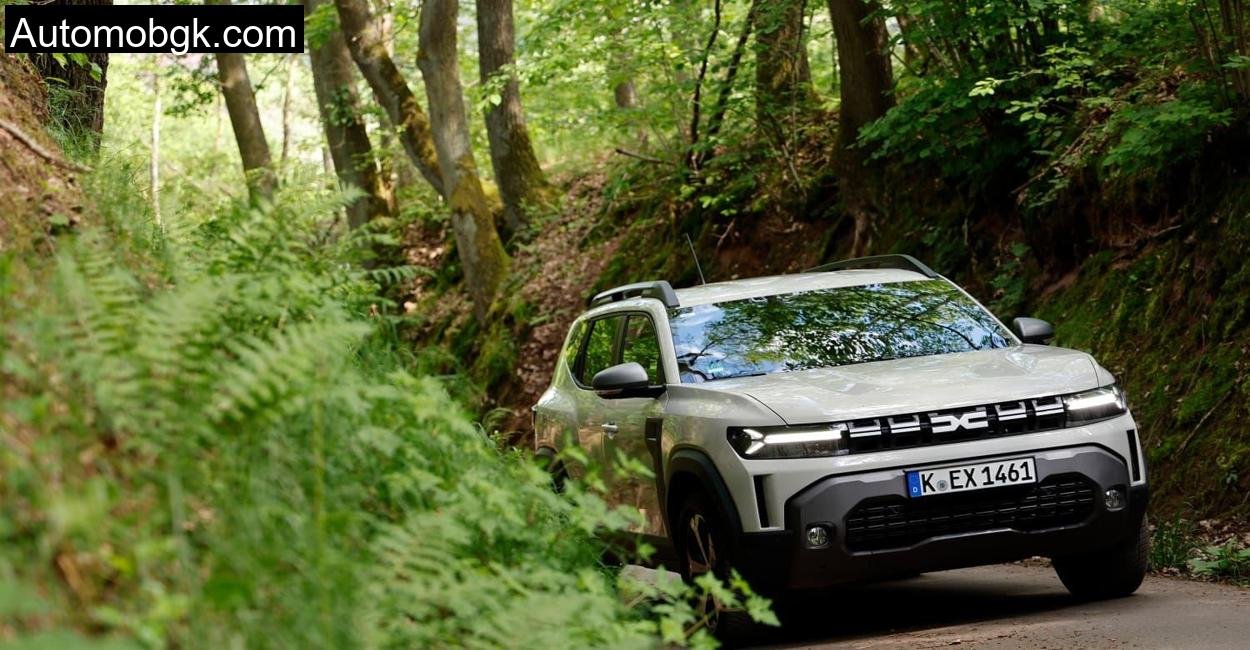
With a thermos of coffee in the cup holder and morning fog thick as soup crawling over the forest floor, I turned the key. Well, not exactly. The Duster’s hybrid system hummed to life silently, with only the dashboard lighting up to confirm it was ready. I wanted to see if this updated Duster, chic, modern, and proudly still affordable, could handle one of the most demanding mixed-terrain drives Germany has to offer. And it did, with a blend of rugged utility and surprising refinement.
Space and Trunk
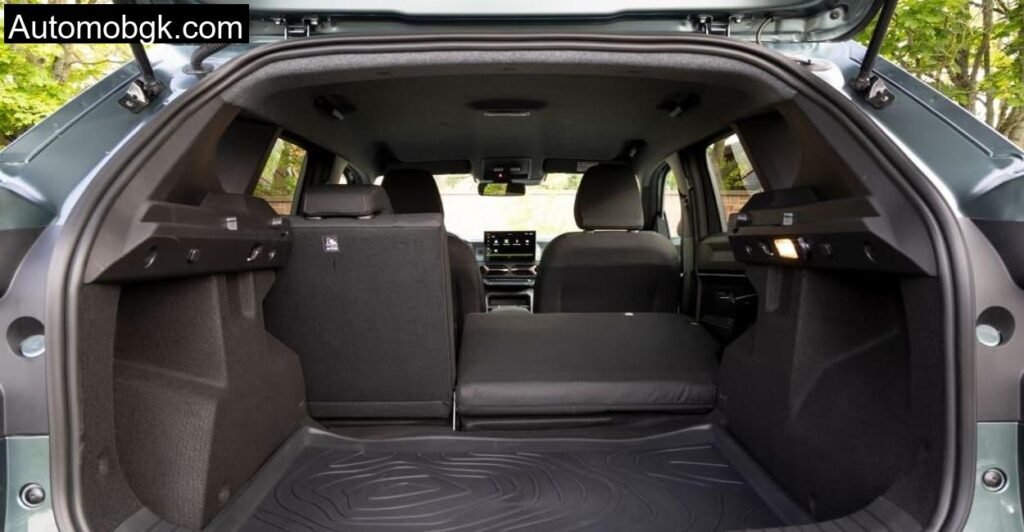
Before even leaving the trailhead, I stowed away two duffel bags, camera gear, a rolled sleeping mat, and a crate of supplies in the 435-liter trunk. The rear seats folded flat easily, opening up to 1,360 liters of space, nearly swallowing my entire kit. For an SUV that’s just a touch longer than a VW Golf, this cargo hold is cavernous.
Front cabin space impressed me too. I’m 6’1″ (around 1.85 m) and had generous leg and headroom behind the wheel. Adjusting the seat fully back and reclining slightly, I still had plenty of breathing room. Rear seats are a little cozier, though someone my size would have their knees brushing the backrest.
One minor gripe? The trunk lid. I banged my head on it twice. At 1.85 m, I had to duck when reaching in. A small price for such usable volume.
Everything is New Inside
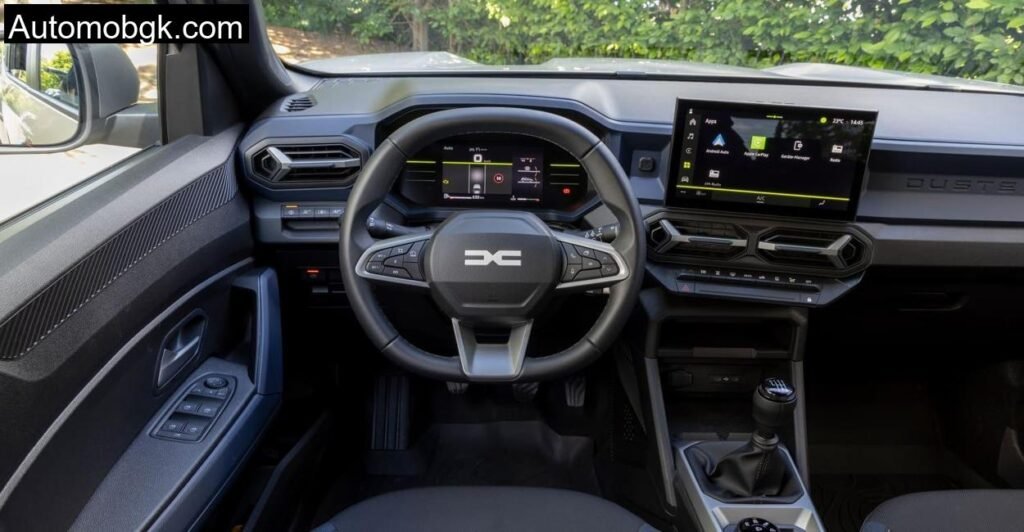
Gone is the spartan, utilitarian cabin. This Duster finally feels like it belongs in this decade. Soft-touch materials are still scarce, yes, but what’s here is robust and purposefully put together.
The 10.1-inch touchscreen tilts slightly toward the driver, a subtle but important detail. Pairing my iPhone via wireless Apple CarPlay was instant. Navigation was quick, and I could queue up a forest soundtrack without a second glance at the screen. The 7-inch digital cluster added a modern flourish without being overdesigned.
What struck me most was how uncomplicated everything was. Real buttons for climate control, clear menus, and tactile knobs. It’s not flashy, but it works. The “Media Live Nav” system on my Journey trim level brought integrated maps and an Arkamys 6-speaker setup. Bass was a bit flat, but vocals were crisp.
The Duster is Also Suitable for Campers
After half a day of climbing narrow logging roads and descending muddy firebreaks, I pulled into a clearing and tested the Duster’s camper cred. Folded the seats, rolled out the Sleep Pack, and there it was, a flat, padded bed for two, nestled in the back of an SUV.
It’s not luxury glamping, but with modular storage, a YouClip mounting system for lights and bags, and ample room to stretch, it felt surprisingly livable. I used one of the mounts to hang a small lantern and made a side table from the built-in shelf.
Granted, the bare metal in the rear doors and cost-conscious trunk carpet betray its budget roots. But none of that mattered as I sipped coffee, staring at pine silhouettes fading into the dusk.
Engines: LPG and 4×4 Drive
This generation Duster offers three powertrains:
Eco-G 100 (LPG): Basic but budget-conscious. A slow but long-range cruiser,1,300 km possible on combined petrol and gas.
TCe 130 (Mild Hybrid): A punchy 131 hp turbo triple, with available 4×4, and decent sprint numbers,0 to 100 km/h in 9.9 seconds.
Hybrid 140: The version I tested, and arguably the sweet spot.
If you’re looking for true off-road capability, note: only the TCe 130 offers 4×4 drive. It includes Hill Descent Control and five terrain modes, backed by live telemetry like body roll, incline angle, and traction readouts. Perfect for off-road junkies.
For most users, though, the Hybrid 140’s electric-glide feel at low speeds, especially in stop-go forest paths and steep gravel descents, makes it a compelling choice.
In the Test: Dacia Duster Hybrid 140
Let’s talk powertrain. The Hybrid 140 marries a 1.6-liter naturally aspirated petrol engine with a 49 hp electric motor, plus a high-voltage starter generator. Torque delivery is smooth up to 60 km/h, at which point the petrol engine kicks in gracefully.
I was crawling through leaf-covered trails at 30 km/h, dead silent in EV mode, listening only to birdsong and tire crunch. With a slight throttle press, the engine came in with a quiet hum, no jerk, no roar.
Punch it, though, and the 140 horses gallop together. 0–60 km/h felt brisk, and overtaking logs and trucks on access roads was confident. Officially, 60 to 100 km/h happens in under 7 seconds, and 80 to 120 km/h in 9.3,impressive for a “budget” SUV.
But the automatic gearbox, a multi-mode unit similar to the one found in Renault hybrids, isn’t always a team player. In spirited driving, it hesitated between shifts, especially on steep ascents. For best results, drive smooth and steady.
Fuel economy was standout. I logged 5.3 L/100 km in the forest (slow speeds, hybrid mode active), but on the Autobahn dash home, it jumped to 7.6 L/100 km. Overall average? 6.1 L/100 km over 400+ km of mixed terrain.
Safe Driving Behavior in the Evasive Test
Dacia has stepped up safety this time. Emergency Lane Keeping Assist, Blind Spot Warning, and Front Collision Alert now come standard from mid-trim levels. In evasive maneuvers, say, dodging a deer that bolted across the gravel, the Duster remained composed, with moderate body roll but no tail-slide.
Braking was confident, with electronic stability programs kicking in early but not intrusively. On loose gravel and sudden turns, traction control didn’t overcorrect, letting the wheels find grip before intervening.
Technical Specification (Hybrid 140)
| Specification | Details |
| Engine | 1.6L NA petrol + 49 hp electric |
| Total Power Output | 140 hp |
| Transmission | Multi-mode automatic |
| Drive Type | Front-wheel drive |
| 0–100 km/h | Approx. 10.1 seconds |
| Top Speed | 160 km/h |
| Fuel Economy (city) | 4.9 L/100 km |
| Fuel Economy (mixed) | 6.0 L/100 km |
| Trunk Volume | 435–1360 liters |
| Towing Capacity | 750 kg |
| Length × Width × Height | 4.34 m × 1.81 m × 1.66 m |
| Ground Clearance | ~209 mm |
| Infotainment | 10.1” touchscreen, 7” instrument |
| Starting Price (Hybrid) | ~€26,000 |
Conclusion
There’s no denying it: the new Dacia Duster Hybrid 140 is no longer the budget bin SUV it used to be. It’s grown up, gained some polish, and put on a sharp jacket. But underneath, it remains honest, functional, and rugged, everything a Duster should be.
Through the winding trails and damp forest roads of Thuringia, it impressed me not by outmuscling pricier SUVs, but by simply getting everything right: comfort, efficiency, space, and usability. Yes, some corners were cut, but none where it truly matters.
Dacia’s Duster is now a true contender, not just for your wallet, but for your respect.
Is the Dacia Duster Hybrid good for long highway drives?
Yes, though not its strongest suit. It cruises well at 120 km/h but feels strained near top speed (160 km/h). Perfect for urban and rural mixed-use.
Can I use the Duster Hybrid for towing?
Light trailers only,its max towing capacity is 750 kg. For heavier loads, opt for the TCe 130 (up to 1500 kg).
Is it worth choosing the Hybrid over LPG or TCe 130?
If you drive mostly in cities and want fuel savings with some electrified smoothness, yes. For 4×4 or heavy towing, the TCe 130 is the better choice.