The Design: Where Wind Becomes Form
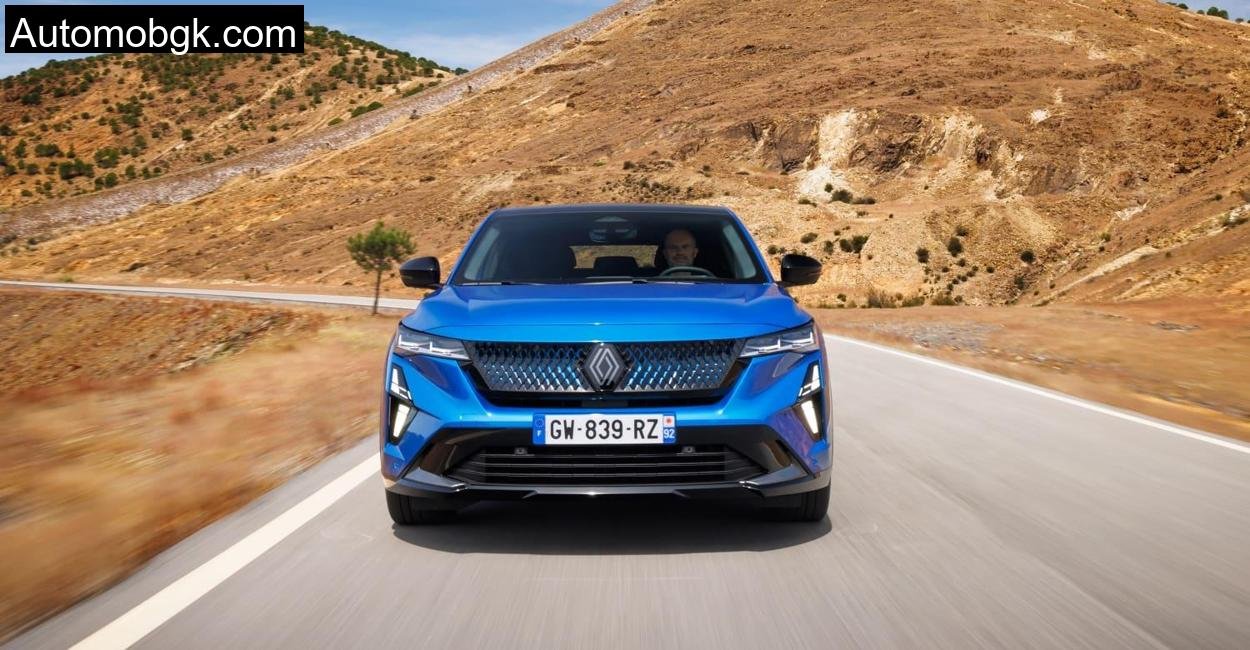
Born from the wind tunnel and baptized in Renault’s new design language, the Rafale doesn’t shout its presence, it glides into it. It’s low-slung for an SUV, more gran turismo than family hauler. The sweeping roofline arcs into a rear deck that might’ve once belonged to a concept car. And those wheels? 20 inches of turbine-inspired ambition.
In person, the Rafale evokes stillness and strength, as if it were sculpted by centuries of wind moving through the basalt cones of Vogelsberg. Laurens van den Acker, Renault’s design lead, wanted a car that felt athletic, aerodynamic, and unmistakably modern, and that’s precisely what it is. The geometric LED signature, frameless grille, and diamond-cut alloys make sure of it.
Cockpit Philosophy: Tech and Texture in Harmony
Inside, the Rafale’s intent becomes even clearer. This is no cabin. This is a lounge wrapped in Alcantara, brushed aluminum, and mood.
The seats, oh, the seats, cradle you like they were mapped from your spine. Wrapped in recycled textiles, accented with subtle blue stitching, they don’t just look good; they communicate Renault’s deeper pivot toward sustainable luxury.
The 12-inch upright touchscreen (OpenR Link with Google built-in) complements a panoramic 9.3-inch driver’s cluster, both sharp and responsive. But the real charm lies above: an electrotinting Solarbay glass roof that dims or clears on demand, bathing you in mountain sunlight, or blocking it entirely with a tap.
Under the Hood: E-Tech, Unleashed
Beneath that sculpted bonnet lies Renault’s most potent full-hybrid powertrain: a 1.2-litre turbocharged 3-cylinder petrol engine paired with dual electric motors, delivering a combined 200 hp. No plugs, no fuss. Just regenerative magic and seamless blending.
The multi-mode automatic gearbox, a clever dog-clutch unit borrowed from Formula 1, offers four ICE modes and two electric motor engagements. Around Schotten’s coiling village roads, it flicked between petrol and electric in eerie silence. There were no jolts, no hesitation, just that whispering e-propulsion.
And in the rare moment I dared floor it on the smoother stretches between Ulrichstein and Laubach? The Rafale surged forward with unexpected urgency,0–100 km/h in around 8 seconds, but more importantly, 100% electric at low speeds and a combined WLTP fuel economy near 4.7L/100km.
Ride Quality: Comfort Over Conquest
This is where the Rafale makes its real argument, not through numbers, but nuance.
Its multi-link rear suspension, combined with a long 2.74m wheelbase, makes it smoother than expected. On Vogelsberg’s patchy backroads and cobbled village crossings, the Rafale felt composed, even plush. The optional 4Control Advanced four-wheel steering wasn’t present on this test car, but the chassis was still obedient, the steering light but precise.
No, it’s not a hot hatch. And it doesn’t want to be. It’s tuned for flow, not fury.
Real-World Efficiency and Electric Grace
Throughout the 90-kilometer journey across Gedern, Herbstein, and the B276 ridgeline, the Rafale returned a real-world average of 4.9L/100km. In urban modes, especially around the basalt museum in Schotten, the car would silently glide on pure electric up to 60 km/h. Traffic? Effortless. Regeneration? Predictable and potent.
This is where Renault’s hybrid system excels, it doesn’t demand user input. There’s no EV mode button or range anxiety. It just works. And it rewards those who drive with finesse.
Interior Innovation: French Flair Meets Nordic Calm
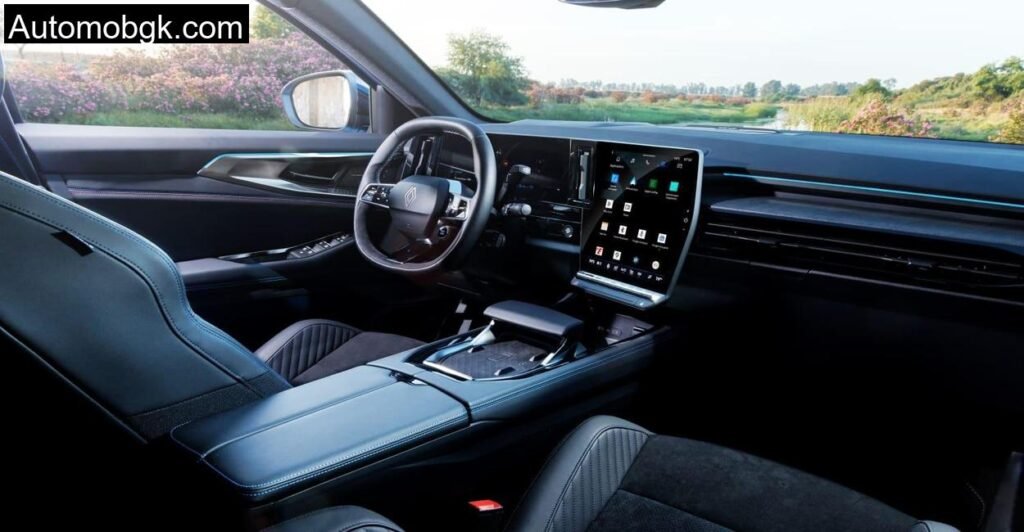
The cabin doesn’t pander to gimmicks. The OpenR screen doesn’t bury simple controls; the climate toggles remain tactile and below the screen. The steering wheel is squared off, not for show, but visibility. And the ambient lighting? It’s tied to the car’s Human First safety ecosystem, gently alerting the driver to nearby hazards through color cues.
There’s a sophistication here that feels earned. Like the Rafale is less interested in impressing journalists, and more focused on welcoming real drivers.
Tech and Safety: Deep Integration, Subtle Execution
Google Maps is standard. So is Google Assistant, wireless Android Auto and CarPlay, adaptive cruise, lane keep assist, blind-spot warning, and emergency braking with pedestrian and cyclist detection. But the biggest surprise? A Level 2 hands-free system called Active Driver Assist that held its own on the winding L3139 stretch without panic or ping-ponging.
This is where the Rafale’s value shows: you get flagship-grade tech without the six-figure German badge.
Space and Practicality: Coupe in Form, SUV in Function
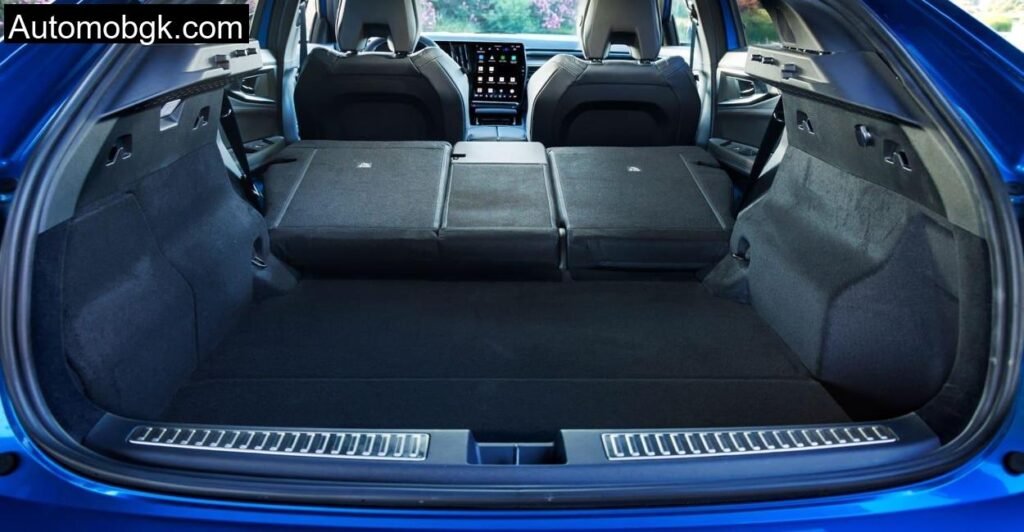
Despite its sloping silhouette, the Rafale’s boot swallows 530 litres. The rear seats, unlike in most coupé-SUVs, offer genuine headroom and legroom, even with the panoramic roof. ISOFIX points are easily accessible. And the rear bench folds 60:40, offering over 1,600 litres of cargo space when flat.
This isn’t a lifestyle SUV. It’s a life-compatible one.
Technical Specifications
| Specification | Details |
| Powertrain | E-Tech Full Hybrid (1.2L petrol turbo + dual electric motors) |
| Engine Type | 1.2-litre 3-cylinder turbocharged petrol |
| Electric Motors | 1 main traction motor + 1 secondary starter-generator motor |
| Total System Output | 200 hp (147 kW) |
| Transmission | Multi-mode automatic dog-clutch gearbox (no clutch pedal) |
| Drivetrain | Front-wheel drive (FWD) |
| Battery Type | Lithium-ion |
| Battery Capacity | 2 kWh (non-plug-in hybrid) |
| Fuel Economy (WLTP) | Approx. 4.7–5.2 L/100 km |
| CO₂ Emissions | Approx. 105–115 g/km |
| Top Speed | 180 km/h |
| 0–100 km/h Acceleration | ~8.0 seconds |
| Suspension (Front) | MacPherson strut |
| Suspension (Rear) | Multi-link |
| Steering | Electric power steering |
| Turning Radius | 10.4 meters |
| Brakes | Disc brakes front and rear with regen braking |
| Wheels | 20-inch alloy wheels (turbine-inspired design) |
| Tyres | 245/45 R20 |
| Length | 4,710 mm |
| Width (with mirrors) | 2,080 mm |
| Height | 1,610 mm |
| Wheelbase | 2,740 mm |
| Boot Space | 530 litres |
| Seating Capacity | 5 occupants |
| Infotainment System | OpenR Link: 12-inch vertical screen + 12.3-inch driver cluster |
| Connectivity | Google built-in, Android Auto, Apple CarPlay (wireless) |
| Safety Features | Adaptive cruise, lane keep assist, AEB, blind spot warning, 360° camera |
| Sunroof | Solarbay electrochromic panoramic glass roof |
| Interior Upholstery | Recycled Alcantara & textile (sustainable material mix) |
Conclusion: The Rafale’s Role in a Quiet Revolution
The Renault Rafale E-Tech Hybrid doesn’t change the world with noise, it rewrites the rulebook with confidence.
It’s a vehicle not born of rebellion, but of refinement. In the silence of Vogelsberg’s pine-shaded passes, the Rafale made its case: that the future of driving isn’t defined by extremes, but by grace. By balance. By understanding that electrification, luxury, and design can coexist in a single, well-executed form.
This isn’t just Renault’s best hybrid yet. It’s one of the best hybrid crossovers Europe has to offer.
What is the power output of the Renault Rafale E-Tech Full Hybrid 200?
The Rafale E-Tech Full Hybrid 200 delivers a combined system output of 200 horsepower (147 kW), generated from its 1.2-litre turbo petrol engine and dual electric motors.
Is the Rafale E-Tech Full Hybrid a plug-in hybrid (PHEV)?
No, it’s a full (self-charging) hybrid, meaning you do not need to plug it in. The battery is charged through regenerative braking and energy recovery from the petrol engine.
What is the fuel economy of the Rafale E-Tech Full Hybrid 200?
The fuel economy is approximately 4.7 to 5.2 litres per 100 km (WLTP), depending on driving conditions and trim level.